
Understanding Avascular Necrosis(AVN) of the Hip Early Signs MRI Findings and Treatment Options in Mumbai by Dr. Kashyap Prabhu Solanki

Updated: Aug 6
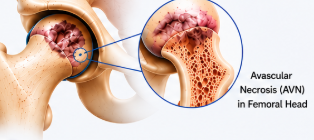
Avascular necrosis (AVN) of the hip in Mumbai is a condition that can silently damage the hip joint, leading to pain and loss of mobility if not caught early. This disorder occurs when blood flow to the femoral head—the ball part of the hip joint—is disrupted, causing bone tissue to die. Early detection and treatment are crucial to prevent joint collapse and the need for major surgery. This article explores the early signs of AVN, how MRI helps in diagnosis, and the treatment options available, based on insights from Dr. Kashyap Prabhu Solanki.

What Causes Avascular Necrosis of the Hip?
AVN happens when the blood supply to the femoral head is interrupted. Without adequate blood flow, bone cells die, weakening the structure. Common causes include:
Trauma: Hip fractures or dislocations can damage blood vessels.
Steroid use: Long-term or high-dose corticosteroids affect blood flow.
Excessive alcohol consumption: Alcohol can cause fatty deposits that block vessels.
Medical conditions: Sickle cell disease, lupus, and certain infections.
Idiopathic: Sometimes, no clear cause is found.
Understanding the cause helps guide treatment and prevention strategies.
Early Signs of Avascular Necrosis
Recognizing AVN early can be challenging because symptoms often start mild and progress slowly. Key early signs include:
Hip pain: Usually felt in the groin, thigh, or buttocks. Initially, pain occurs only during weight-bearing activities.
Limited range of motion: Stiffness and difficulty moving the hip joint.
Limping: As pain worsens, patients may develop a limp to reduce pressure on the affected hip.
Pain at rest: In advanced early stages, pain may occur even when resting or lying down.
If you experience persistent hip pain without injury, especially if you have risk factors, seek medical evaluation promptly.
How MRI Helps Diagnose AVN Early
X-rays often appear normal in the early stages of AVN, making MRI the preferred imaging method. MRI can detect changes in bone marrow and blood supply before structural damage occurs.
MRI Findings in Early AVN
Bone marrow edema: Swelling inside the bone appears as a bright signal on certain MRI sequences.
Double-line sign: A characteristic feature showing a bright inner line and a dark outer line on T2-weighted images, indicating dead bone surrounded by reactive tissue.
Subchondral fracture: Small cracks beneath the cartilage surface may be visible.
Loss of normal marrow signal: Areas of dead bone show different signal intensity compared to healthy bone.
MRI not only confirms the diagnosis but also helps stage the disease, which is essential for planning treatment.
Treatment Options for Avascular Necrosis of the Hip
Treatment depends on the stage of AVN, the size of the affected area, and the patient’s overall health. The goal is to relieve pain, preserve the joint, and prevent collapse.
Non-Surgical Treatments
Medications: Pain relievers and anti-inflammatory drugs help manage symptoms.
Reduced weight-bearing: Using crutches or limiting activities to decrease stress on the hip.
Physical therapy: Exercises to maintain joint mobility and strengthen muscles.
Bisphosphonates: Some studies suggest these drugs may slow bone damage.
Non-surgical methods are most effective in very early stages or small lesions.
Surgical Treatments
When AVN progresses or causes joint collapse, surgery may be necessary.
Core decompression: Removing a small core of bone to reduce pressure and stimulate blood flow. Best for early-stage AVN.
Bone grafting: Transplanting healthy bone to support the femoral head.
Osteotomy: Realigning the bone to shift weight away from damaged areas.
Total hip replacement: Replacing the damaged joint with an artificial one, usually reserved for advanced cases.
Choosing the right surgery depends on disease severity and patient factors.
Living with Avascular Necrosis
Managing AVN requires ongoing care. Patients should:
Monitor symptoms closely and report any worsening pain.
Follow medical advice on activity levels and medications.
Maintain a healthy lifestyle to support bone health.
Avoid alcohol and smoking, which can worsen blood flow.
Early diagnosis and treatment improve outcomes and may delay or prevent the need for hip replacement.
Frequently Asked Questions — AVN of the Hip in Mumbai
Q1: Can AVN of the hip be completely cured without surgery in Mumbai?
A: In very early stages (Stage 1 and small lesions), AVN can sometimes be managed without surgery using core decompression combined with physiotherapy and activity modification. However, once the femoral head starts collapsing, surgery becomes necessary. Dr. Kashyap Solanki evaluates every AVN patient with MRI at his clinics in Andheri East and Vile Parle West, Mumbai to determine the most appropriate treatment at the earliest possible stage.
Q2: How quickly does AVN of the hip progress if untreated in Mumbai?
A: AVN can progress from early bone changes to complete joint collapse within months to a few years if left untreated. The speed of progression depends on the underlying cause, size of the affected area, and whether the patient continues activities that stress the hip. Dr. Kashyap Solanki strongly advises patients with known risk factors for AVN in Mumbai to seek immediate evaluation if they develop hip or groin pain.
Q3: Is MRI necessary for diagnosing AVN in Mumbai or is X-ray sufficient?
A: MRI is essential for early diagnosis of AVN. X-rays are often completely normal in the early stages when treatment is most effective. By the time changes appear on X-ray, significant bone damage has usually already occurred. Dr. Kashyap Solanki recommends MRI as the first investigation for any patient with hip pain and risk factors for AVN at his clinics in Andheri East, Mumbai.
Q4: What is core decompression and is it available in Andheri Mumbai?
A: Core decompression is a minimally invasive surgical procedure where a small tunnel is drilled into the affected femoral head to reduce pressure and stimulate new blood vessel formation. It is most effective in Stage 1 and Stage 2 AVN before joint collapse occurs. Dr. Kashyap Solanki performs core decompression surgery at Amardeep Nursing Home and New JP Hospital in Andheri East, Mumbai. Read more about AVN treatment at drkashyapsolanki.in/dr-kashyap-solanki-orthopaedic-surgeon-avascular-necrosis-avn.
Q5: Which doctor treats AVN of the hip in Andheri Mumbai?
A: Dr. Kashyap Solanki is one of Mumbai's leading orthopaedic surgeons specialising in AVN treatment, from early-stage core decompression to total hip replacement for advanced cases. He practices at Amardeep Nursing Home and New JP Hospital in Andheri East. Book a consultation at drkashyapsolanki.in/dr-kashyap-solanki-orthopaedic-surgeon-contact-us.
Orthopaedic Surgeon – Andheri, Mumbai
Dr. Kashyap Prabhu Solanki
Dr. Kashyap Solanki is an orthopaedic surgeon specializing in hip and knee replacement, robotic‑assisted knee surgery, and joint preservation procedures such as HTO, arthroscopy, and ligament reconstruction.
He is also known for handling complex revision joint replacements and managing challenging upper and lower limb fractures. With a strong focus on precision, ethical practice, and patient‑centered care, Dr. Solanki is committed to restoring mobility and improving quality of life through advanced orthopaedic solutions.
Late Dr. Prabhu Solanki
The late Dr. Prabhu Solanki was one of Mumbai’s most respected and experienced orthopaedic surgeons, with a distinguished career spanning over four decades.
During his lifetime, he treated more than 40,000 patients and performed over 10,000 surgeries, earning immense trust and recognition across India and internationally.
His legacy of precision, ethical care, and exceptional surgical outcomes continues to inspire patients and practitioners alike. Many families across generations still seek treatment at Amardeep Nursing Home because of the foundation he built and the values he upheld.


Comments