
The Impact of Diet on Gout Management and Uric Acid Levels by Dr Kashyap Solanki
- Dr. Kashyap Solanki

- Jul 26, 2025
- 5 min read
Updated: Aug 4, 2025
Gout is more than just occasional pain; it is a chronic condition caused by the buildup of uric acid in the body. This buildup can lead to debilitating joint pain. For those suffering from gout, making the right dietary choices can make a substantial difference in managing symptoms and improving quality of life. In this blog post, we will discuss how specific foods and lifestyle changes can impact uric acid levels and help control gout effectively.
Understanding Gout and Uric Acid
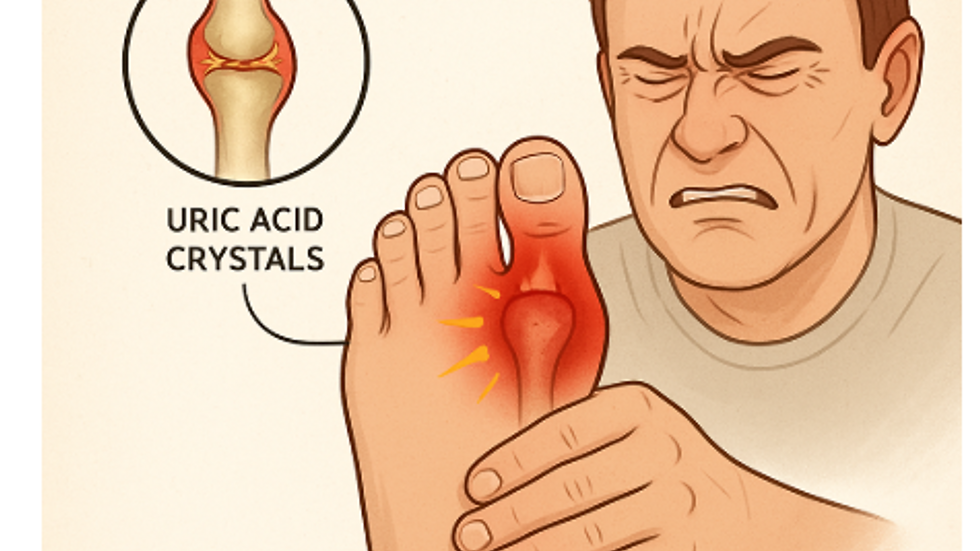
Gout manifests as sudden, intense pain, often in the big toe. This pain occurs due to the formation of uric acid crystals in joints. Uric acid is created when the body breaks down purines, which are naturally found in many foods. If uric acid levels rise too high, it can lead to painful flare-ups.
Research shows that around 8.3 million adults in the U.S. are affected by gout. Understanding how diet influences uric acid production provides invaluable insights into controlling this condition.
Primary Complaints
Sudden, intense joint pain – Often in the big toe (most common), but also in the ankles, knees, elbows, wrists, and fingers.
Swelling – The affected joint becomes swollen and warm.
Redness and tenderness – Skin over the joint may appear red and shiny.
Limited range of motion – Joint stiffness or difficulty moving the joint.
Lingering discomfort – After the acute attack, pain may persist for days to weeks.
Other Signs
Tophi – Lumps of urate crystals under the skin (in chronic gout).
Recurrent attacks – Gout can become chronic with repeated episodes.
Fever – Occasionally, especially if inflammation is severe.
The Connection Between Diet and Uric Acid Levels
High-Purine Foods to Avoid
Diet is a significant factor in controlling gout symptoms. Some foods are high in purines and should be limited:
Red Meat: Consuming about 6 ounces of beef or lamb daily can raise uric acid levels significantly.
Organ Meats: Liver and kidneys are exceptionally high in purines; just 3 ounces can contain up to 400 mg of purines.
Certain Seafood: Shellfish, sardines, and mackerel are particularly problematic. A serving of sardines can pack up to 200 mg of purines.
Avoiding these foods can be key in managing gout.
Low-Purine Foods to Favor
In contrast, focusing on low-purine foods can positively impact uric acid levels. Good dietary choices include:
Fresh Fruits and Vegetables: These are not only low in purines but also rich in vitamins. For example, a daily serving of cherries can lower uric acid levels by up to 15%.
Whole Grains: Foods like brown rice and oats provide complex carbohydrates without raising uric acid levels.
Low-Fat Dairy Products: Yogurt and skim milk may actually help reduce uric acid, making them good choices for those with gout.
Incorporating these options can help diminish the frequency of gout crises.
The Role of Hydration
Hydration plays a pivotal role in managing uric acid levels. Drinking plenty of water—aim for at least 2 liters (about eight glasses) a day—helps dilute uric acid in the bloodstream and facilitates its removal through urine. In warm weather or when exercising, this can be even more crucial.
Studies indicate that adequate water intake can significantly reduce the risk of recurrent gout attacks. Additionally, consider incorporating low-calorie fluids, such as herbal teas or coconut water, for added benefits.
Alcohol consumption should be minimized as beer can raise uric acid levels by 7% after just two drinks.
The Influence of Weight Management
Obesity is a critical risk factor for gout. Studies suggest that losing just 5 to 10% of body weight can result in a noticeable reduction in uric acid levels and fewer attacks.
A balanced diet rich in whole foods and increased physical activity is essential in shedding excess pounds. Even moderate exercise, like brisk walking or swimming for 30 minutes a day, can significantly aid in weight management and reduce gout symptoms.
Foods That May Help Manage Gout Symptoms
While diet alone may not eliminate symptoms, some foods can help with managing gout. Here are a few examples:
Cherries: Studies have shown that consuming around 1.5 cups (about 150 grams) of cherries can lower uric acid levels and reduce inflammation.
Leafy Greens: Spinach and kale are nutrient-dense options that complement a low-purine diet.
Legumes: Foods like beans and lentils are not only low in purines but also high in protein and fiber, making them satisfying and healthy.
Nuts and Seeds: Almonds, walnuts, and flaxseeds provide healthy fats without increasing purine intake.
Supplements and Their Benefits
Certain supplements may support gout management. Vitamin C shows promise in lowering uric acid levels, potentially through its antioxidant properties. Omega-3 fatty acids may also help reduce inflammation associated with gout flare-ups.
Remember to consult a healthcare professional before starting any supplements, as they must be tailored to your unique health conditions and may interact with medications.
Lifestyle Changes for Gout Management
Beyond diet, lifestyle choices play a vital role in gout management. Regular physical activity not only maintains a healthy weight but also promotes overall health. Choose low-impact exercises such as biking or swimming, which are gentle on the joints.
Incorporating stress management techniques—like meditation or yoga—can further improve overall well-being and may help reduce the frequency of gout attacks.
Taking Charge of Your Gout Management
Managing gout effectively takes a committed approach that combines dietary changes, exercise, and hydration. By focusing on nutrient-rich, low-purine foods, maintaining a healthy weight, and staying adequately hydrated, you can significantly decrease the chance of gout attacks.
Making informed dietary decisions is critical in controlling uric acid levels. By understanding the strong relationship between diet and gout, you can take actionable steps toward effective management. Always consult a healthcare professional to develop a personalized plan tailored to your health needs, as this will lead to better outcomes in the long run.
Orthopaedic Surgeon in Juhu, Orthopaedic Surgeon in Vile Parle, Orthopaedic Surgeon in Andheri, Orthopedic Surgeon in Mumbai, Hip & Knee Replacement Surgeon in Andheri, Hip & Knee Replacement Surgeon in Juhu, Hip & Knee Replacement Surgeon in Vile Parle, Hip & Knee Replacement Surgeon in Santacruz, Orthopaedic Surgeon in Santacruz, robotic knee replacement, total knee replacement (TKR), gold knee replacement, arthroscopic knee surgery (knee arthroscopy), Hiflex knee replacement, unicompartmental knee replacement, total hip replacement, shoulder replacement, shoulder arthroscopy, microlumbar discectomy, lumbar fusion, spine surgery, Orthopedic Surgeon, Knee Specialist Mumbai, Hip Replacement Surgeon Mumbai, Spine Surgeon Mumbai, Andheri East, Santa Cruz East, Mumbai, Knee & Spine Clinic, Orthopedics & Physiotherapy, Specialized knee, hip, spine treatments, Minimally invasive spine surgery, Precision Orthopedics, Joint Replacement Surgery, Physiotherapy post-surgery.


Comments